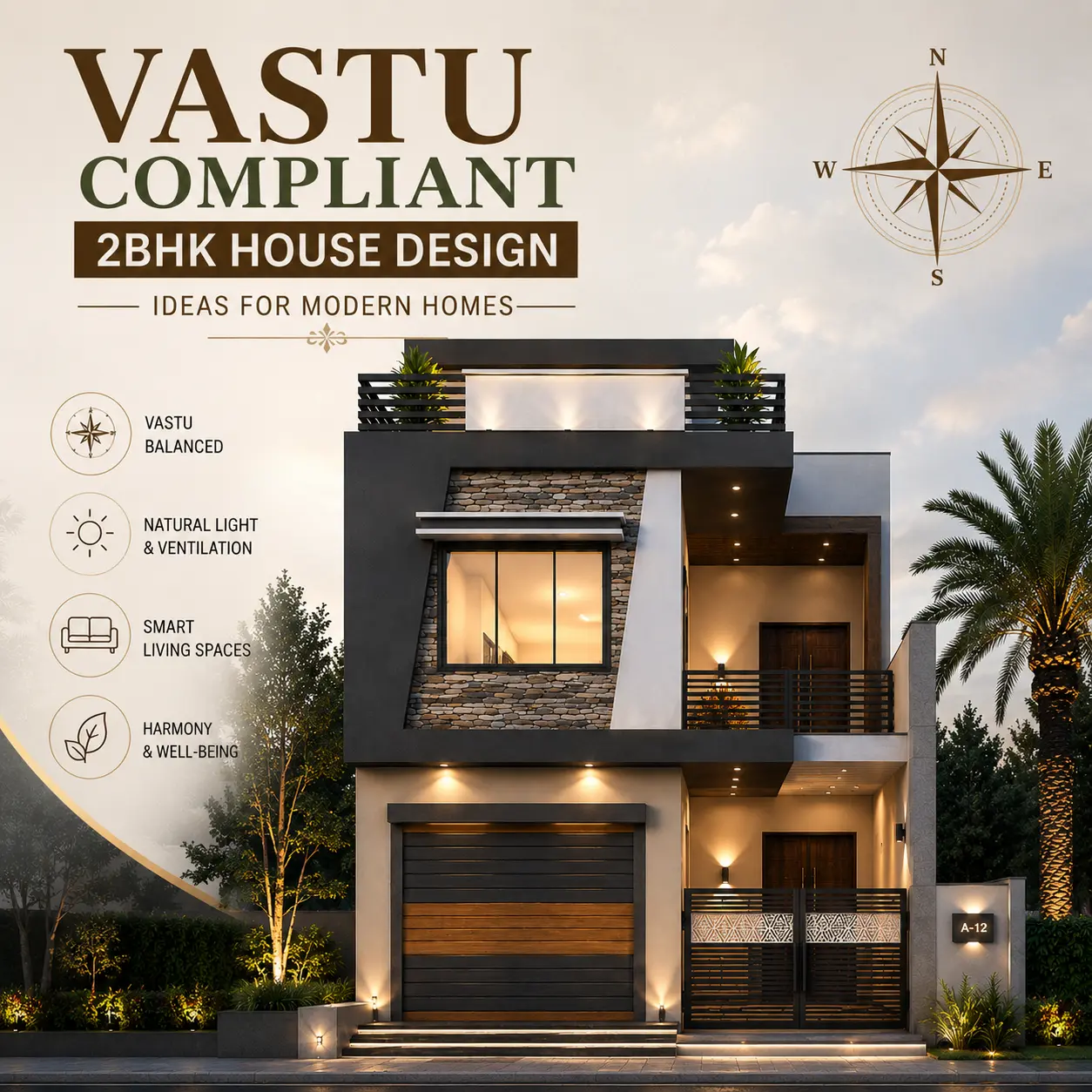
Building a home is more than just arranging rooms and selecting finishes. For many homeowners, creating a space that promotes positivity, comfort, and well-being is equally important. This is where a Vastu-compliant 2BHK house design plan can make a significant difference. Vastu Shastra, an ancient Indian architectural science, focuses on balancing the natural elements and directional energies within a home.
Today, modern homeowners want practical layouts, smart space utilization, and aesthetically pleasing interiors while also following Vastu principles. The good news is that both can work together seamlessly. A thoughtfully planned home plan design can offer functionality, comfort, and harmony without compromising on modern living requirements.
In this guide, we'll explore some practical Vastu-compliant 2BHK house design ideas that can help you create a balanced and comfortable home.
A 2BHK home is one of the most popular choices for small and medium-sized families. Since space is often limited, proper planning becomes essential. Vastu principles help optimize the placement of rooms, entrances, windows, and utilities to create a positive living environment.
Benefits of incorporating Vastu into your home include:
Better natural light and ventilation
Improved space utilization
Enhanced comfort and functionality
A balanced and peaceful living atmosphere
Better alignment with traditional preferences
When combined with well-planned house plans and designs, Vastu can contribute to a more organized and welcoming home.
The entrance is considered one of the most important aspects of Vastu. Ideally, the main door should be located in the north, northeast, or east direction.
A properly positioned entrance allows natural light and airflow to enter the home while creating a positive first impression. During the initial home blueprint design stage, architects often evaluate the plot orientation to determine the most suitable entrance location.
The living room serves as the central gathering space for family and guests. According to Vastu, the living room should ideally be located in the north, east, or northeast part of the house.
To make the area more inviting:
Use light and neutral color palettes
Maximize natural lighting
Keep furniture arrangements open and uncluttered
Allow easy movement throughout the room
Modern open-concept layouts work particularly well with these recommendations.
The kitchen represents the fire element and should ideally be placed in the southeast direction of the house.
Important Vastu suggestions include:
Position the cooking stove in the southeast area.
Face east while cooking whenever possible.
Keep the sink away from the stove to maintain balance between fire and water elements.
Ensure proper ventilation through windows or exhaust systems.
A carefully planned floor design plan can help create a functional kitchen while maintaining Vastu compliance.
The master bedroom is best located in the southwest direction. This placement is believed to provide stability and comfort for homeowners.
Some practical design tips include:
Position the bed with the head facing south or east.
Avoid placing mirrors directly opposite the bed.
Choose calming colors and minimal clutter.
Modern bedroom layouts can easily incorporate these principles without affecting aesthetics.
For a typical 2BHK layout, the second bedroom can be placed in the northwest, west, or north direction.
This arrangement provides flexibility for:
Children's bedrooms
Guest accommodations
Study rooms
Multi-purpose spaces
With remote work and online learning becoming increasingly common, many homeowners now integrate study corners into secondary bedrooms.
Bathrooms should ideally be located in the northwest or west direction of the home.
When planning bathrooms:
Ensure proper ventilation.
Avoid sharing walls with the kitchen whenever possible.
Maintain cleanliness and drainage efficiency.
Proper placement during the home plan design stage helps avoid costly modifications later.
One aspect where Vastu and modern architecture strongly align is the importance of natural light and airflow.
Consider:
Large windows in the east and north directions.
Cross-ventilation throughout the home.
Open spaces that allow sunlight to reach living areas.
Good ventilation not only supports Vastu principles but also improves overall living comfort and energy efficiency.
A Vastu-friendly home doesn't have to look traditional. Modern homeowners can combine contemporary design trends with Vastu recommendations.
Popular features include:
Open layouts improve space utilization and create better movement throughout the home.
Built-in wardrobes, concealed cabinets, and multi-functional furniture help reduce clutter and maintain positive energy flow.
Modern families often need spaces that can serve multiple purposes, such as a guest room that doubles as a home office.
Natural lighting, energy-efficient materials, and eco-friendly construction practices support both modern living and Vastu principles.
Even a beautiful home can face functionality issues if planning is overlooked.
Avoid these common mistakes:
Ignoring plot orientation during planning
Poor ventilation and insufficient natural light
Overcrowding rooms with furniture
Improper kitchen placement
Neglecting storage requirements
Focusing only on aesthetics while ignoring practicality
A detailed home blueprint design can help identify potential issues before construction begins.
Every family has different requirements, making customization essential. Before finalizing your design, consider:
Family size and lifestyle
Future expansion needs
Plot dimensions and orientation
Budget considerations
Parking and outdoor space requirements
Vastu preferences
The best house plans and designs balance functionality, comfort, aesthetics, and long-term usability.
A well-planned Vastu-compliant 2BHK house design plan can help create a home that feels comfortable, functional, and balanced. By combining traditional Vastu principles with modern design concepts, homeowners can make better use of available space while improving natural light, ventilation, and overall living experience.
Whether you are creating a new home plan design, exploring different house plans and designs, or preparing a detailed home blueprint design, careful planning at the initial stage can help avoid costly modifications in the future. Paying attention to room placement, circulation, storage, and orientation ensures that the home remains practical for years to come.
At Bungalow Makers, we regularly work on customized residential projects that blend modern architecture with practical planning considerations such as Vastu preferences, space optimization, and attractive front elevation design concepts. The goal is always to create homes that are not only visually appealing but also comfortable and functional for everyday living.
Unlock the Secrets of Perfect Floor Plans
and Inspiring Interior Designs!
Bungalow Makers: Embark on a journey of excellence in Commercial and Residential 3D Elevation and Interior Designs. Read more...
 India
India +917880088716
 Whatsapp


